
What Is the Steamtown Gandydancer? The Railroad History Behind the Name
What Is the Steamtown Gandydancer? The Railroad History Behind the Name

25 Mar, 26

The Grit and Groove of the Steamtown Gandydancer

Here in Northeast Pennsylvania, hard work is baked into our DNA. Long before the Wilkes-Barre/Scranton Penguins ever took the ice, this region was built on the backs of miners, factory workers, and railhands who understood the value of relentless effort. The foundation of our local communities relies heavily on a shared history of resilience and teamwork.

For the Penguins, teamwork dictates everything we do. Passing the puck, coordinating a defensive stand, and trusting the player next to you are all requirements for success. But over a century ago, a different kind of team was executing synchronized maneuvers just down the road. They were shaping the nation’s infrastructure, and their legacy remains deeply embedded in local railroad history.

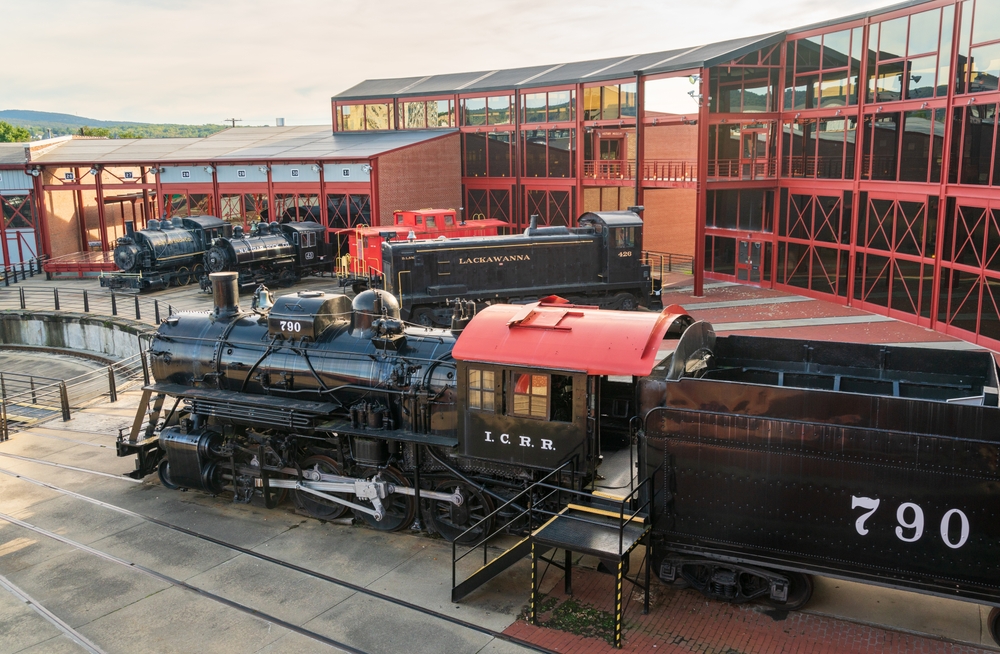
They were known as gandy dancers. If you visit the Steamtown National Historic Site in Scranton, you might hear tales of the Steamtown Gandydancer. These early railroad workers laid the very tracks that connected our cities and towns. Their story is a masterclass in collaboration, grit, and endurance.

Defining the Gandy Dancer

The term “gandy dancer” is a piece of classic American slang used to describe early section hands. Before heavy machinery and automated track-laying equipment took over, railroads were built and maintained entirely by human strength. Workers had to lever heavy rails into precise alignment, drive heavy spikes, and pack ballast under wooden ties.

The origin of the name ties directly to the tools of the trade. Many historians link the moniker to the Gandy Manufacturing Company, a Chicago-based business that produced the heavy iron tools used by these crews. The “dancer” portion of the name came from the physical movements of the workers. Aligning heavy steel rails required a crew to move in perfect unison. As they leaned into their pry bars and stepped in time, their synchronized motions looked remarkably like a choreographed dance.

The Art of the Rail

Laying and maintaining railroad tracks was brutally demanding work. A standard rail could weigh well over a thousand pounds. Moving it fractions of an inch to ensure the tracks remained straight and safe required immense physical exertion from an entire crew.

The process involved several exhausting steps. Workers had to carry and set heavy wooden ties into the crushed rock ballast. They hoisted the steel rails onto the ties, gauged the distance between them, and hammered heavy iron spikes to secure the structure. Every movement had to be exact. A misaligned track could lead to a catastrophic derailment, meaning the gandy dancers carried the safety of entire trains on their shoulders.

This required a level of physical trust and coordination that rivals any professional sports team. Everyone had a specific role, and failing to pull your weight meant the entire line faltered.

Rhythms of the Rails

To achieve the necessary synchronization, gandy dancers relied heavily on rhythm. Much like sailors using sea chanteys to coordinate the hoisting of heavy sails, railroad workers used work songs, chants, and calls to align their efforts.

A designated “caller” would lead the crew. The caller sang out a rhythmic chant, and the rest of the crew would respond, timing their collective heave or strike to a specific beat in the song. This musical element was vital for safety and efficiency. It ensured that ten different men applied their maximum force to a steel rail at the same millisecond. Without this rhythmic coordination, moving the heavy iron would have been impossible.

The songs themselves were often adapted to the specific pace of the task at hand. Fast, driving rhythms were used for driving spikes, while slower, sustained calls were used for leveraging rails.

Diverse Foundations

The story of the gandy dancer is also the story of early American diversity. The crews that built and maintained the country’s railroad history came from wildly different backgrounds, often taking on this grueling labor as a means to build a new life.

After the Civil War and throughout the early 20th century, track crews were incredibly diverse. African American workers made up a massive portion of the gandy dancers, particularly in the South, and brought deep musical traditions that heavily influenced the work calls. Irish immigrants, Mexican laborers, and Chinese workers also made up significant segments of the workforce across different regions of the country.

Despite grueling conditions and low pay, these diverse crews functioned as unified teams. They had to rely on one another completely to survive the grueling shifts and dangerous environments.

Legacy at Steamtown

The era of the gandy dancer slowly came to a close in the 1960s. As technology advanced, mechanized track maintenance machines were introduced, replacing the need for large crews of manual laborers. Machines could lift, align, and spike rails in a fraction of the time.

Today, the legacy of these workers is preserved at locations like the Steamtown National Historic Site. Through collected oral histories, former gandy dancers have shared their firsthand accounts of the work. They often describe the job as incredibly difficult, yet marked by a unique sense of camaraderie and pride. Steamtown’s archives ensure that the Steamtown Gandydancer remains a recognized figure in our region’s industrial past.

Honoring Our Local Heritage

Understanding our local railroad history gives us a deeper appreciation for the work ethic that defines Northeast Pennsylvania. The gandy dancers proved that when individuals coordinate their efforts toward a single goal, they can move mountains—or at least thousands of pounds of solid steel.

At the Wilkes-Barre/Scranton Penguins, we try to carry that same collaborative spirit onto the ice every single night. We know our fans appreciate hard work, toughness, and a team that fights for every inch. If you are ready to see that NEPA grit in action, gather your own crew and come out to the arena. Secure your WBS Penguins tickets today and join us for our next home game.

White Tux

REQUEST TICKET INFORMATION

"*" indicates required fields

This field is for validation purposes and should be left unchanged.